What Auto “Restomods” Teach Us About Rebranding
When a brand has been around for a long time—two, three, four decades or more—the stakes are simply higher. The longer a company has existed, and the more meaning it holds for customers, employees, or a broader community, the more carefully change has to be handled.
We’ve all seen how wrong this can go. The Gap rebrand is probably the most famous example. In 2010, Gap rolled out a new logo that ditched its iconic blue box in favor of a minimalist redesign — and the internet absolutely lost it. The backlash was so intense that Gap reverted to the classic logo in less than a week.
Similarly, big heritage brands are still learning this lesson. Take Jaguar: in late 2024 the British automaker unveiled a bold new brand identity with a redesigned logo and campaign aimed at signaling its transition to an all-electric future. That move sparked widespread online debate — some accusing the brand of abandoning its heritage and confusing long-time fans. The controversy was serious enough that reports surfaced of the company parting ways with its Chief Creative Officer, Gerry McGovern — the design leader behind much of the brand’s recent work — as the new leadership prepared to reset direction.

"JK JK JK"
But we also can’t let fear paralyze us. That applies to branding just like it does to life. Brands don’t stay relevant by standing still. And the longer you wait to refresh things, the harder—and riskier—it becomes.
This is where I think the idea of a “restomod” is useful.
A restomod, for the uninitiated, is a blend of restoration and modernization. Take an old car—say, one built in 1976 Bavaria. Nearly fifty years later, some things about that car are undeniably charming… and some things are significantly worse than what we expect today.
When you restore a car like that, you often modernize parts of it too. You might keep the body lines, the interior smell, the soul of the thing—but upgrade the engine, the brakes, the suspension, maybe even the paint technology. The goal isn’t to erase the past. It’s to make the experience better without losing what made it special in the first place.
That’s why restomods are so popular—and profitable. You get the romance of the old with the performance and reliability of the new. Best of both worlds.
And that’s exactly how heritage brands should think about rebranding.
If you’re going to refresh a brand with real history, you don’t just scrap everything. You certainly don’t discard the nostalgia, trust, and goodwill that took decades to earn. Instead, you apply the lightest touch you can get away with. You modernize what needs to be modernized, clarify what’s drifted, and preserve—maybe even amplify—the elements that people already love.

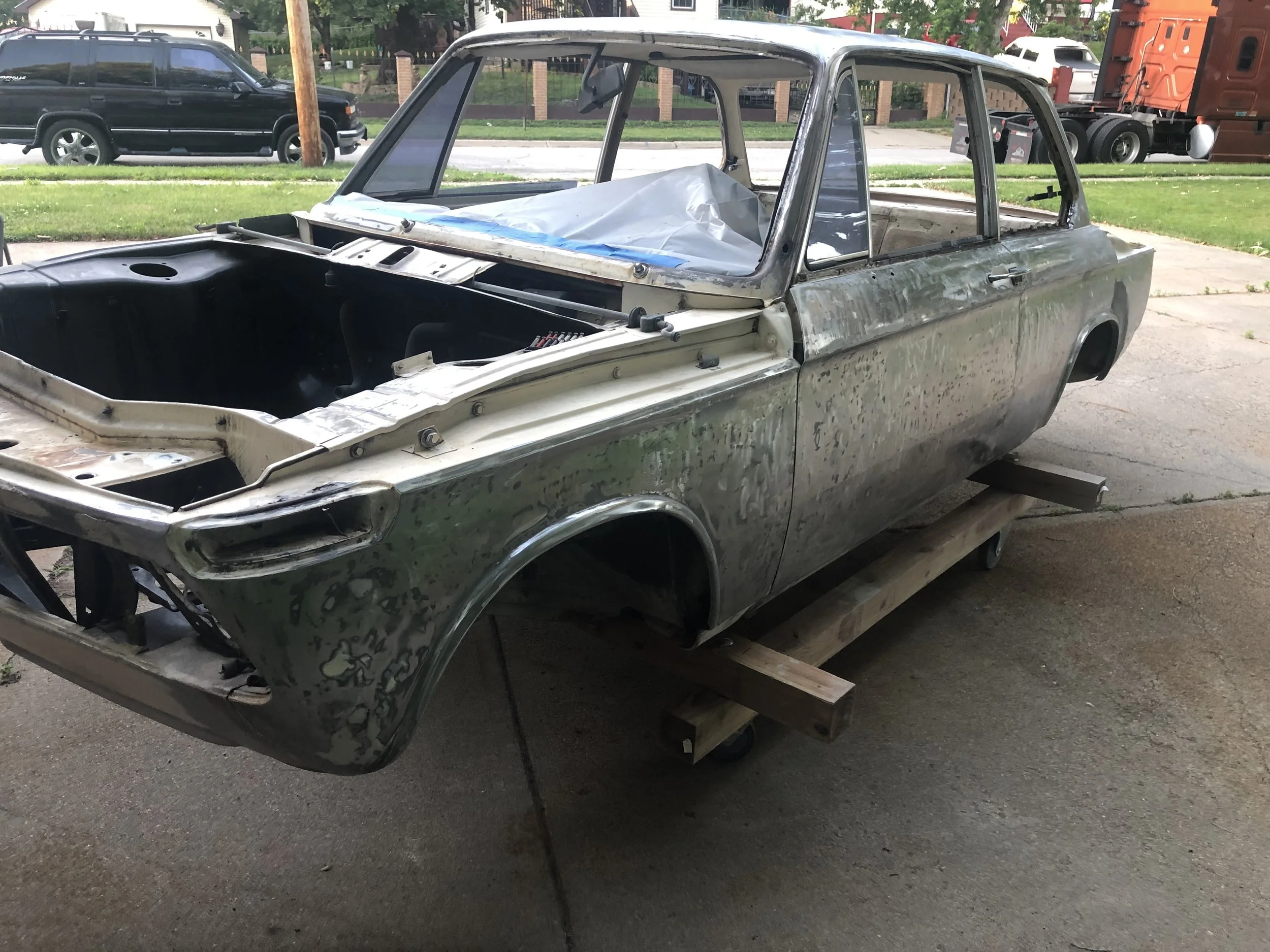

A personal reminder that the best upgrades respect what was already working. My restomodded 1976 BMW 2002, mid-restoration and back on the road.
After all, real people spent real years building that brand into what it is. Sweeping in and “burning the room down” just to show off new design work isn’t bold—it’s careless. Unfortunately, it happens more often than anyone likes to admit.
The best rebrands don’t scream. They feel inevitable.
Respect the history. Keep a light touch. Take the best of what’s old and combine it with the best of what’s new.
That’s the winning formula—whether you’re turning spanners or shaping brands.
Inspired by motorsport engineer Colin Chapman’s famously common sense philosophy “Simplify, then add lightness”, Leggera Creative represents the consultation & communications design work of Colby & Rachel Shenkle. They’re brilliant at elevating your image, detangling communications, & spotlighting growth opportunities – all with a common sense approach.